ملحمة الكلمات : كلمات متقاطعة
Alborda Games OyWord
4.55.00 Reviews
- Version
- 1.19.2
- Installs
- 100.00K
- Age Rating
- Everyone
Screenshots
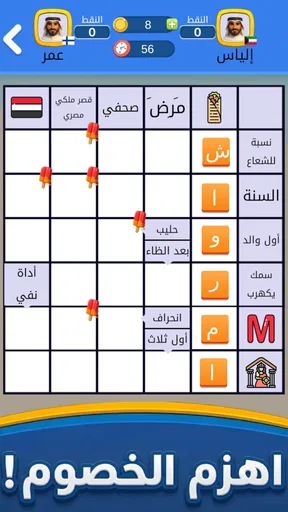
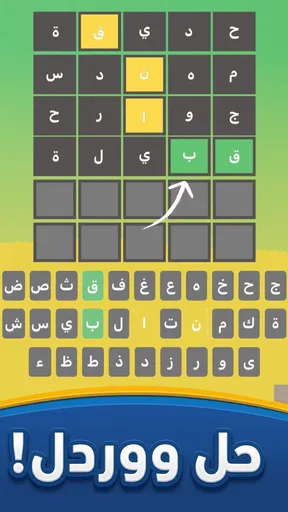
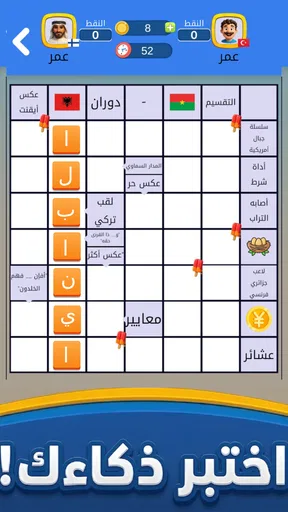
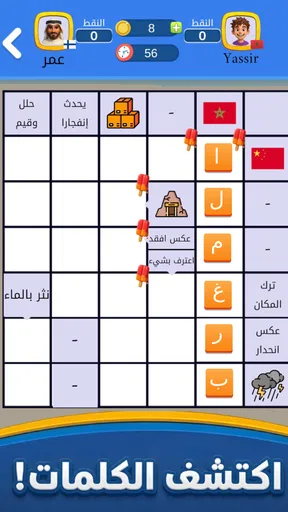
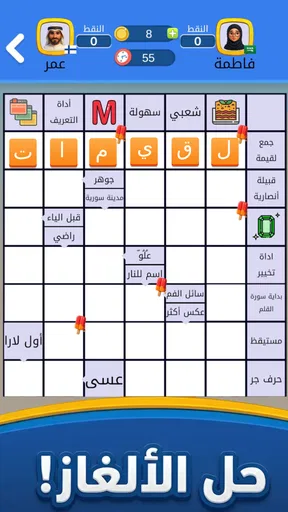
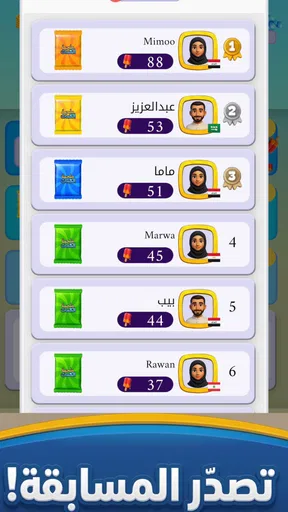
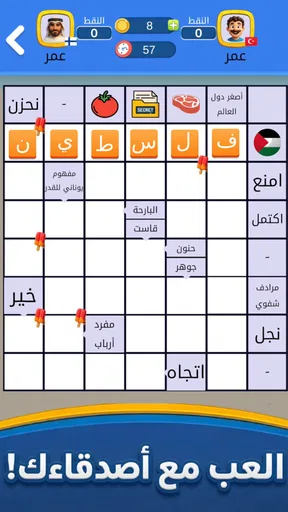
Our Review of ملحمة الكلمات : كلمات متقاطعة
 Analysis by Appyee
If you enjoy word games but do not want to commit to a long session, ملحمة الكلمات : كلمات متقاطعة is an easy place to start. I found its appeal in the simple promise of opening a puzzle, reading a clue, and gradually turning scattered letters into a satisfying answer. It is a free word game from Alborda Games Oy, aimed at Everyone, and its focus is clearly on riddles and crossword-style thinking rather than fast reflexes or complicated controls.
The first thing I would tell a friend is that this is best approached as a quiet, repeatable brain exercise. You do not need to learn a large ruleset before playing. The challenge comes from interpreting clues, testing possible words, and noticing how one answer can help unlock another. That makes it suitable for a short break, a commute, or a relaxed evening when I want something more engaging than scrolling but less demanding than a full strategy game.
What the first session feels like
The store presents the game as a puzzle and crossword experience, while its short description, “ملحمة الكلمات,” gives it an Arabic identity even though the app can be considered by anyone looking for this style of play. In practical terms, the important expectation is straightforward: you are here to solve word clues, not to manage characters, build an island, or compete through action stages.
I like that distinction because it helps set the right mood. Crossword games reward patience and language familiarity. A clue that seems obvious may still require a few attempts, and a short answer can be harder than a long one because there are fewer letters to guide you. The enjoyment comes from the small breakthrough: one correct word confirms a letter, that letter narrows the next clue, and the puzzle begins to open up.
There is also a useful difference between this type of game and a traditional newspaper crossword. A paper puzzle is fixed on the page and usually expects you to bring your own pencil, eraser, and patience. A mobile game is more convenient for quick attempts. I can pick it up when I have only a few minutes, stop when my attention drops, and return later without carrying anything except my phone. That convenience is the strongest reason to choose this format.
The game has an average rating of 4.4 from around 2.8 thousand ratings, which suggests that its basic word-puzzle approach is connecting with a meaningful group of players. I would still treat that as a starting signal rather than a guarantee that every clue will match your vocabulary. Word games are personal: a clue that feels clever to one player can feel vague or overly familiar to another.
Who will enjoy it most
I would recommend it to people who like crosswords, riddles, spelling challenges, and calm games that can be played without sound or a large time commitment. It is especially approachable if you want a game that exercises recall and deduction without making you memorize complicated controls. Its Everyone age rating also makes the presentation broadly suitable for general audiences.
It may be less suitable if you need constant visual action, direct competition, or a strong story to keep you moving. Players who prefer word games built around rapid timed rounds may find a crossword format too deliberate. Likewise, if you dislike being stuck on a clue, the experience can become frustrating unless you are comfortable taking a break and returning with a fresh perspective.
Getting started without overthinking it
Installation should feel familiar to Android users because the game supports Android 7.0 and later. The current version is 1.19.2, so anyone using a reasonably modern compatible device should begin from a straightforward starting point. Once it is installed, I suggest opening the first puzzle with the goal of understanding the clue style rather than trying to clear everything immediately.
My preferred first-session routine is simple. I scan the whole puzzle, answer the clues that appear obvious, and then use those answers as anchors for the harder ones. This is more effective than staring at one stubborn clue for several minutes. In a crossword, every confirmed letter has value, so an easy answer is not merely progress; it is information that can change the shape of the entire puzzle.
When trying a clue, I pay attention to the wording before guessing letters. Is it asking for a thing, an action, a description, or perhaps a familiar expression? Even without a complicated strategy system, this small habit reduces random attempts. If two answers seem possible, I use the crossing letters to decide instead of choosing the word that came to mind first.
A realistic everyday use case is a ten-minute wait before an appointment. I can open a puzzle, solve the clues I recognize, and stop after making a few useful connections. The session still feels complete even if the whole board is not finished. That is an important advantage over games that punish you for leaving early or require a long uninterrupted run.
Your first meaningful success
The first satisfying moment usually arrives when an answer does more than fill one space. It confirms several crossing letters and makes another clue suddenly readable. I recommend treating that chain reaction as the main objective of the opening session. Do not rush to solve in order from top to bottom; move around the puzzle and build a network of reliable answers.
One practical technique is to separate certainty from possibility. I mentally mark clues I know confidently, clues that have a likely answer, and clues where I am only guessing. Entering a speculative answer can be useful, but I avoid building too much around it until the crossing words support it. This prevents one weak guess from sending the rest of the puzzle in the wrong direction.
If you reach a wall, take a short pause instead of repeatedly forcing the same clue. Word recall often improves when the wording is no longer in front of your mind. Returning after a few minutes can make a familiar answer appear naturally. This is not a trick unique to crossword games, but it matters here because the app is at its best when solving feels thoughtful rather than like trial and error.
I also recommend using the game as a vocabulary check rather than assuming every unfamiliar word is a mistake. Crossword-style puzzles can expose gaps in everyday knowledge, spelling, or phrasing. If a solution feels unexpected, look at the letters around it and reconsider the clue’s exact meaning. The most useful learning comes from understanding why an answer fits, not simply forcing the board to accept it.
Where new players may hesitate
The main confusion for a first-time player is often not the controls but the relationship between clues and crossing letters. A clue may look solvable on its own, yet the intended answer becomes clear only after neighboring entries provide enough context. I would not interpret an early struggle as a sign that the game is too difficult. It is usually a reminder to work from the information already available.
Another possible source of friction is the expectation that every clue should have one instantly obvious answer. That is rarely how good word puzzles work. Several words may seem to fit a broad clue, but only one will agree with the complete pattern. When I feel uncertain, I stop asking “What word could this be?” and instead ask “What word fits both the clue and every letter I already have?” That change in approach is surprisingly helpful.
Players should also be aware that free games with optional purchases can affect how they plan their use. ملحمة الكلمات : كلمات متقاطعة is free to download and play, while its listed in-app purchase range runs from $0.99 to $84.99 per item. I would recommend deciding in advance whether you want to stay with the free experience or spend on optional items, rather than making a purchase simply because one puzzle has become annoying.
That price range is worth noticing because the low and high ends represent very different spending decisions. For a casual player, there is no reason to treat purchases as part of the basic definition of the game. I would first play enough to decide whether the clue style suits me. If I am enjoying the puzzles without assistance, keeping the experience free is the clearest choice. If I am considering a purchase, I would do so for convenience, not because solving every board quickly is necessary.
Building a better solving habit
Once the opening puzzles feel comfortable, I would change from “finish this board” to “improve my solving process.” Start by scanning for short, familiar answers and entries with distinctive letters. Then use those letters to test longer solutions. This approach is more reliable than beginning with the most interesting-looking clue, because the most useful answer is often the one that unlocks the most surrounding information.
A second helpful habit is to notice repeated clue patterns. Word games often train you to recognize how a clue is phrased, whether it points toward a definition, a synonym, or a common association. I would keep a mental note of clues that repeatedly slow me down. The goal is not to memorize a hidden answer bank, but to become better at identifying what kind of response the wording is inviting.
There is a trade-off between speed and accuracy. Guessing quickly can create momentum, but it can also fill the puzzle with assumptions that later need correcting. Careful solving takes longer at first and usually produces cleaner progress. For this particular game, I prefer accuracy because the satisfaction comes from seeing the whole set of crossing answers make sense together.
Another useful workflow is to stop at a natural checkpoint. If most of the puzzle is complete but one clue remains, I do not always force it immediately. I review the letters, read the clue aloud in my head, and consider whether I am interpreting its part of speech correctly. If the answer still does not come, leaving the game for later protects the relaxing quality that brought me to it in the first place.
How it compares with familiar alternatives
Compared with a daily crossword, this game is more flexible because I can use it whenever I want rather than waiting for a new newspaper or scheduled puzzle. That makes it better for building a regular habit. The trade-off is that a paper crossword can feel more deliberate and tactile, especially for people who enjoy writing answers by hand and seeing the entire page at once.
Compared with word-search games, the emphasis here is different. Word searches reward visual scanning and pattern recognition, while crossword solving asks me to interpret language and connect meanings. If I want a quick visual challenge, a word search may be more immediately accessible. If I want to think about definitions and spelling, this game is the better match.
Compared with competitive word games, it should appeal more to players who prefer private progress. There is less pressure to answer before another person does, and the experience is easier to fit around ordinary interruptions. On the other hand, anyone who depends on live opponents, rankings, or social tension for motivation may find the solitary puzzle format less compelling.
The game’s strongest position is therefore not that it replaces every other word app. It occupies a useful middle ground: more thoughtful than a very quick letter scramble, more convenient than a printed crossword, and calmer than a head-to-head word match. That combination makes it particularly suitable for people who want a repeatable mental break rather than a high-intensity challenge.
When I would skip it
I would skip this game if my main reason for downloading a word title was to learn a language through structured lessons. Solving clues can expose me to vocabulary, but that is not the same as guided teaching, pronunciation practice, or a course with clear progression. A dedicated language-learning app would be a better choice for that goal.
I would also look elsewhere if I wanted a game with a strong narrative, character development, or a deep reward system. The appeal here is the puzzle itself. That focus is a strength when I want a clean mental exercise, but it may feel limited if I need a broader game world to maintain interest over time.
Finally, I would be cautious about installing it for a child who needs highly structured educational content. The Everyone rating indicates broad suitability, but age suitability and educational design are not identical. I would play alongside a younger user first and decide whether the clue language and level of challenge feel appropriate for that individual.
My recommendation after settling in
After the first successful puzzle, I would keep playing in short, consistent sessions rather than trying to turn every visit into a marathon. The game works well as a daily mental reset: open it when I have a spare moment, solve the clues that come naturally, and leave the difficult ones for later. That rhythm keeps the challenge enjoyable and avoids making progress feel like an obligation.
For a first-time user, my clearest advice is to begin with confidence, not pressure. Solve the obvious clues, use crossing letters intelligently, and treat uncertainty as part of the puzzle rather than as a failure. If a board becomes frustrating, pause before considering any optional purchase. A fresh look is often more valuable than a rushed solution.
Alborda Games Oy has made a focused word game for people who like riddles and crossword thinking in a mobile format. With over one hundred thousand installs, it has already found an audience, and its 4.4 average gives the basic concept a credible reception. The free entry point makes it easy to test personally, while the Everyone rating keeps the game broadly approachable.
My final view is positive, with a clear qualification: this is a good choice when you want calm, clue-driven problem solving, not when you need action or a large social layer. The best way to enjoy ملحمة الكلمات : كلمات متقاطعة is to use its crossing letters as clues, not to fight the puzzle one answer at a time. If that style of thinking sounds satisfying, I would recommend installing it and giving the first puzzle a patient ten-minute try.
For me, the meaningful success is not simply clearing a board. It is reaching the point where the clues begin to connect, the guesses become informed decisions, and a few quiet minutes leave me feeling sharper rather than overstimulated. That is where this word game makes its strongest case.
Verdict
Strengths of ملحمة الكلمات : كلمات متقاطعة
- Large Arabic vocabulary keeps puzzles varied and challenging.
- Hints help players progress when a clue proves difficult.
- Short levels make it easy to play during brief breaks.
- Improves Arabic spelling, vocabulary, and general knowledge.
- Simple controls make the game accessible to most age groups.
Limitations of ملحمة الكلمات : كلمات متقاطعة
- Some puzzles may rely on regional or less familiar Arabic terms.
- Difficulty can vary noticeably between consecutive levels.
- Repeated hint use may reduce the satisfaction of solving clues.
- Small text or dense layouts may be uncomfortable on smaller screens.
- Progress may feel slow for players who prefer faster rewards.
Similar Picks in This Category
View All
Word Search - Word Puzzle Game
Bluetile4.8

Word Search Quest - Puzzles
Blackout Lab4.8

CodyCross: Crossword Puzzles
Fanatee, Inc.4.7

Words of Wonders: Crossword
Fugo Games4.9

Wordscapes: Word puzzle game
PeopleFun4.7

Word Search Explorer
PlaySimple Games4.9
Frequently Asked Questions
What is ملحمة الكلمات : كلمات متقاطعة, and how is the game played?
ملحمة الكلمات : كلمات متقاطعة is a crossword-style word puzzle game designed for Arabic-speaking players. You solve clues and complete intersecting word grids by selecting the correct letters. The game generally combines traditional crossword mechanics with progressive levels, making it suitable for short sessions or longer play periods. Familiarity with Arabic vocabulary is helpful, although the difficulty may increase gradually as you advance.
Does ملحمة الكلمات : كلمات متقاطعة require an internet connection?
Many crossword games allow at least some puzzles to be played offline after installation, but online features may depend on the specific version of the app. An internet connection can be required for downloading additional content, displaying advertisements, synchronizing progress, or accessing updates and special events. Before traveling or playing without data, open a few levels while connected and check whether the available puzzles remain accessible offline.
Is ملحمة الكلمات : كلمات متقاطعة free to download and play?
The game can generally be downloaded without an upfront purchase, allowing users to try its core crossword experience at no initial cost. However, free versions may include advertisements, optional purchases, hints, or other features that can affect the experience. Players should review the store listing and in-app purchase information before downloading, especially if the application will be used by children or on a shared device.
Is the game suitable for beginners and children?
ملحمة الكلمات : كلمات متقاطعة can be a good choice for players who enjoy Arabic vocabulary, spelling, and general-knowledge challenges. Beginners may find the early puzzles approachable, while later stages can require broader vocabulary and more careful thinking. Parents should still check the content, advertising, permissions, and purchase settings before allowing children to play, since difficulty, clue themes, and monetization can vary between updates.
What should I do if I get stuck on a crossword clue?
If a clue is difficult, first examine the crossing letters because they often reveal the answer’s pattern. Many crossword games also provide hints or assistance options, sometimes in exchange for coins earned during play or obtained through optional purchases. It is worth trying the puzzle again after taking a short break, since clues may rely on Arabic synonyms, general knowledge, or word forms that are not immediately obvious.
Play our best games!


